Seven-channel FISH opens here. So does the record of who scored it.
DataTorch is the review and AI layer for cytogenetics labs. Multi-channel FISH, dGH, and metaphase captures render in the browser with each fluorophore as its own layer, your own models take the first pass at the routine calls, and every scoring decision is attributed, versioned, and signed off. A chromosome imaging company trains models off its scoring workflow on DataTorch today.
The images that matter most open in the fewest tools.
Multi-channel FISH and metaphase captures are the core of the lab, and general annotation tools cannot show them usefully: one window and level for the whole image, no way to hide one fluorophore to read another, channel names lost on import. So scoring stays inside the capture vendor software or on one specialist desktop, where nothing about the decision is recorded and nothing feeds a model.
Keep the microscope, the capture software, and the reporting system.
DataTorch does not capture images and does not replace your capture vendor software or your reporting workflow. It reads the files your microscope already writes to storage you control and hands the scored result back through exports and the API, so it sits beside what the lab runs today rather than displacing it.
Yours
Your microscope and capture software
01
Connect
Point DataTorch at the storage your captures already land in: S3, Azure, or Google Cloud. Files are read in place.
02
Model first pass
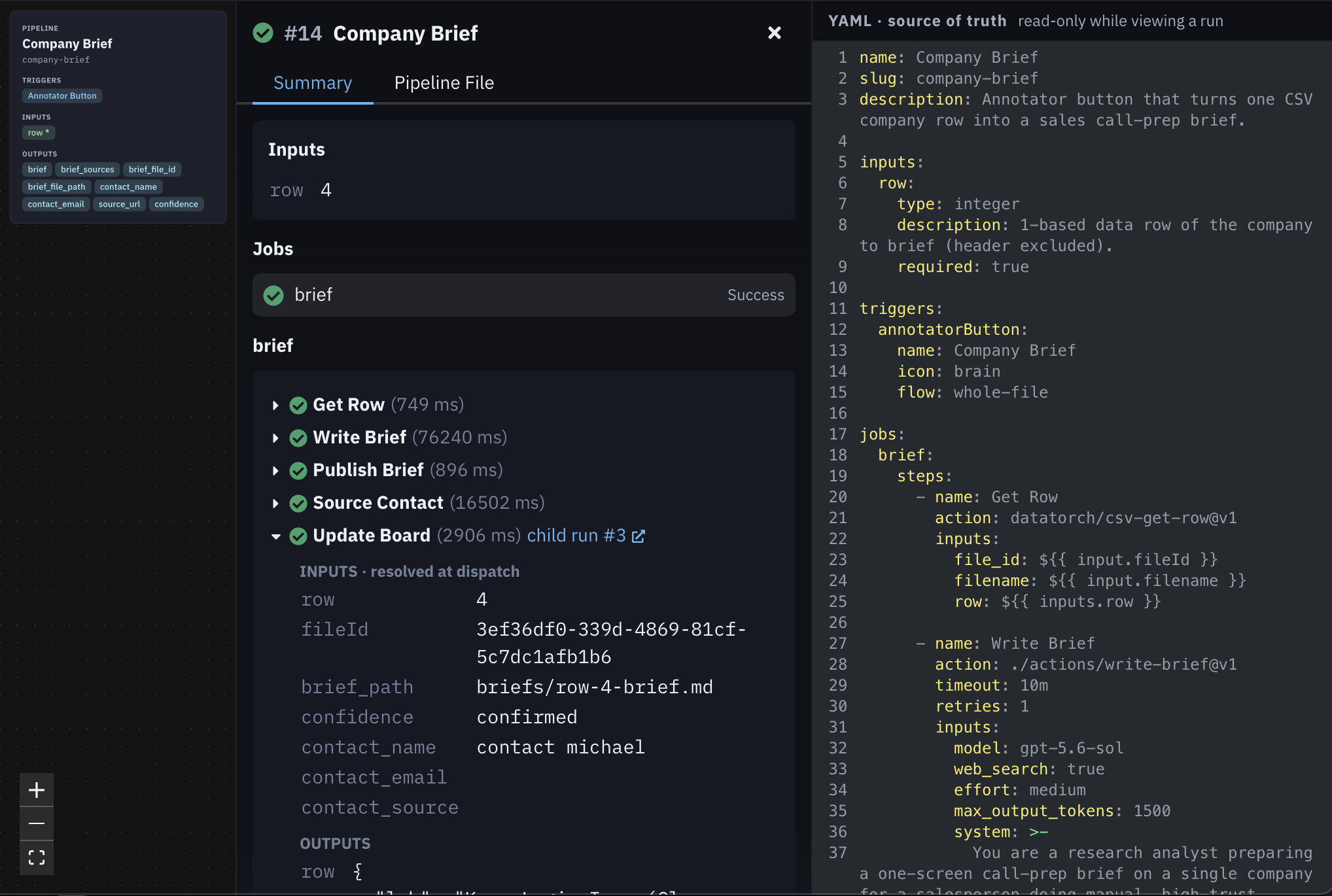
Your own spot-counting or classification models run as a pipeline step, on your compute, and propose the routine calls.
03
Expert scoring
Specialists score against a label schema shaped to your SOP, with every channel under independent window and level.
04
Sign off and export
A reviewer signs the dataset off and it locks. Results leave through exports or the API, and into your next training run.
Yours
Your reporting and records
A layer per fluorophore
Show, hide, and window-level each channel independently, with the channel names read from your files.
Inverted view
Flip a channel to a white-background, photo-negative view for DAPI and banding reads.
Side-by-side comparisons
Cut every annotated chromosome or signal out of the field, lay them side by side, and export the panel.
Sign-off and lock
A reviewer signs the dataset off. The version locks, and unlocking to amend goes on the record too.
Every decision attributed
An append-only history records who scored what and when, and any earlier state can be reconstructed.
Your models in the loop
Wrap your own models as pipeline steps for the routine calls. Specialists confirm the rest.
01 / Expert scoring
Built around how a cytogeneticist actually reads a field.
Every fluorophore is its own layer with its own window, level, and color, named from the file. Hide the counterstain to count spots, bring it back to place them, flip to an inverted view for banding. The label schema is shaped to your SOP, and specialists claim assigned work from a task inbox with each submission recorded.
02 / Your models
Your models take the first pass. On your compute.
Wrap your own spot-detection, classification, or segmentation models as pipeline steps. They run on hardware you control, and their proposals land in the normal scoring flow for a specialist to confirm or correct. Your weights and your images never reach a vendor model, and every confirmed call adds to the labeled set your next training run uses.
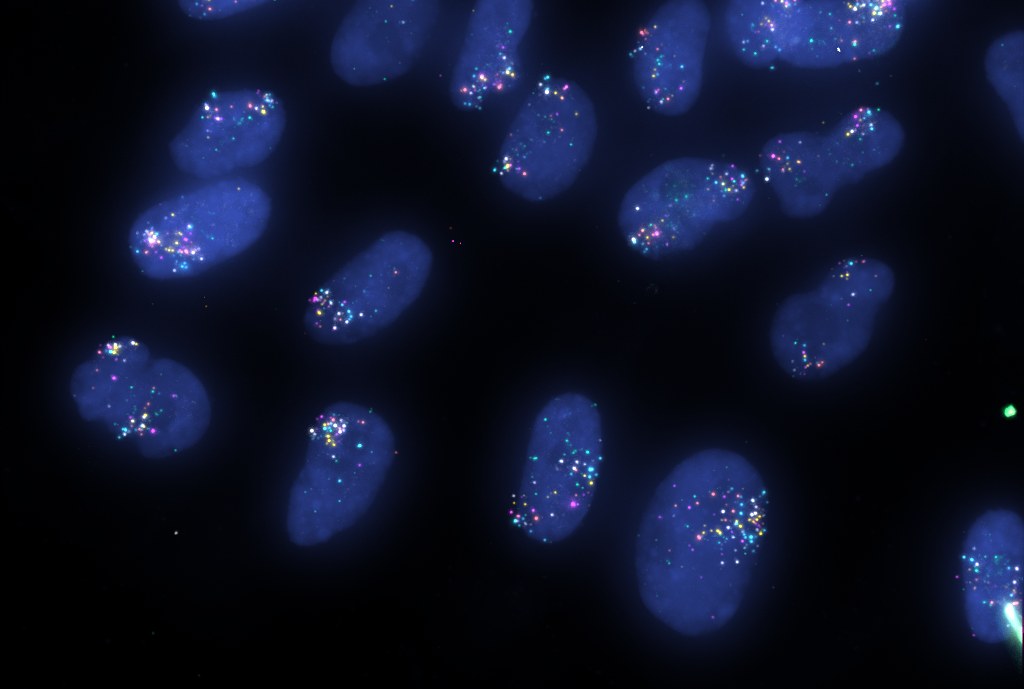
Open a seven-channel iFISH field. No account needed.
A public field from the Image Data Resource (idr0123, Mota et al. 2022, CC BY 4.0): DAPI plus six FISH probes marking chromosome 1 loci, as one file with a page per channel. Toggle fluorophores, drag the window and level, and see the viewer on real cytogenetics data before a call.
Data control
Nothing leaves your infrastructure.
The questions your IT and quality teams will ask first, answered without hedging.
Your bucket, your credentials
Connect your own S3, Azure Blob, or Google Cloud Storage. DataTorch reads the images in place. They are never copied into a vendor bucket.
Your models, your hardware
Model agents run as Python on compute you control. Your weights and your images never reach a third-party model.
Hosted, your cloud, or no network at all
Run on our hosted cloud, deploy the same product into your own cloud, or install it fully air-gapped via Helm with an offline signed license.
Your data stays portable
Annotations export to COCO, YOLO, or JSON, and the GraphQL API and Python SDK reach every project, so the work is yours to take elsewhere.
DataTorch is not a certified or validated system, and it does not replace your quality process. It is built to run inside the environment your quality team already controls: on your hardware, against your storage, with no outbound path for your images. We’ll go through the specifics with your team on a call.
Already scoring production assays.
KromaTiD scores production dGH assays on DataTorch and trains models off that scoring workflow. The live demo above uses public iFISH data so you can see the same viewer on real cytogenetics images today.
See it on your own images.
Start with a free private project, or book a demo to discuss your team’s images, models, and review workflow.
datatorch@datatorch.io · we reply within a business day

Tools and community for image annotation: label, review, and share datasets, from everyday photos to the imagery only specialists can read.
© 2026 DataTorch. All rights reserved.