From raw imagery to a reviewed, exportable dataset.
Connect your own storage, label with pixel-accurate CV tools and the LUT control specialized imagery needs, put human tasks and your own models in the same pipeline, and pull training-ready data back out: COCO, YOLO, GraphQL API, or Python SDK.
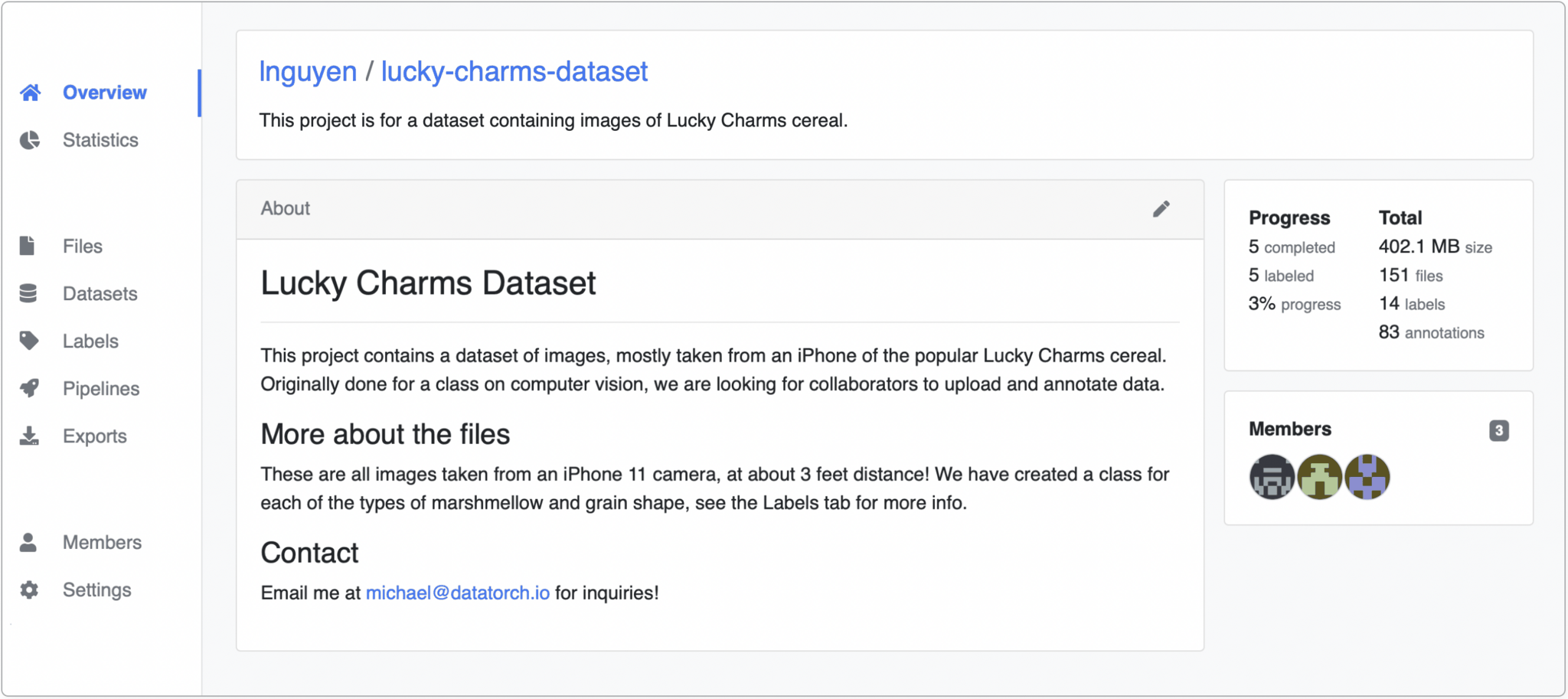
Four steps, one workflow.
1
Ingest
Connect your storage (S3, Azure, GCS, or local) and work on files in place. No copies, no lock-in.
2
Label & review
Draw boxes, polygons, keypoints, and masks, or score on your schema, with model predictions landing inline.
3
Automate
Pipelines run human tasks and your own models under one I/O contract, on your own runners.
4
Compound
Reviewed work leaves as a training set you own: COCO or YOLO exports, the GraphQL API, or the Python SDK.
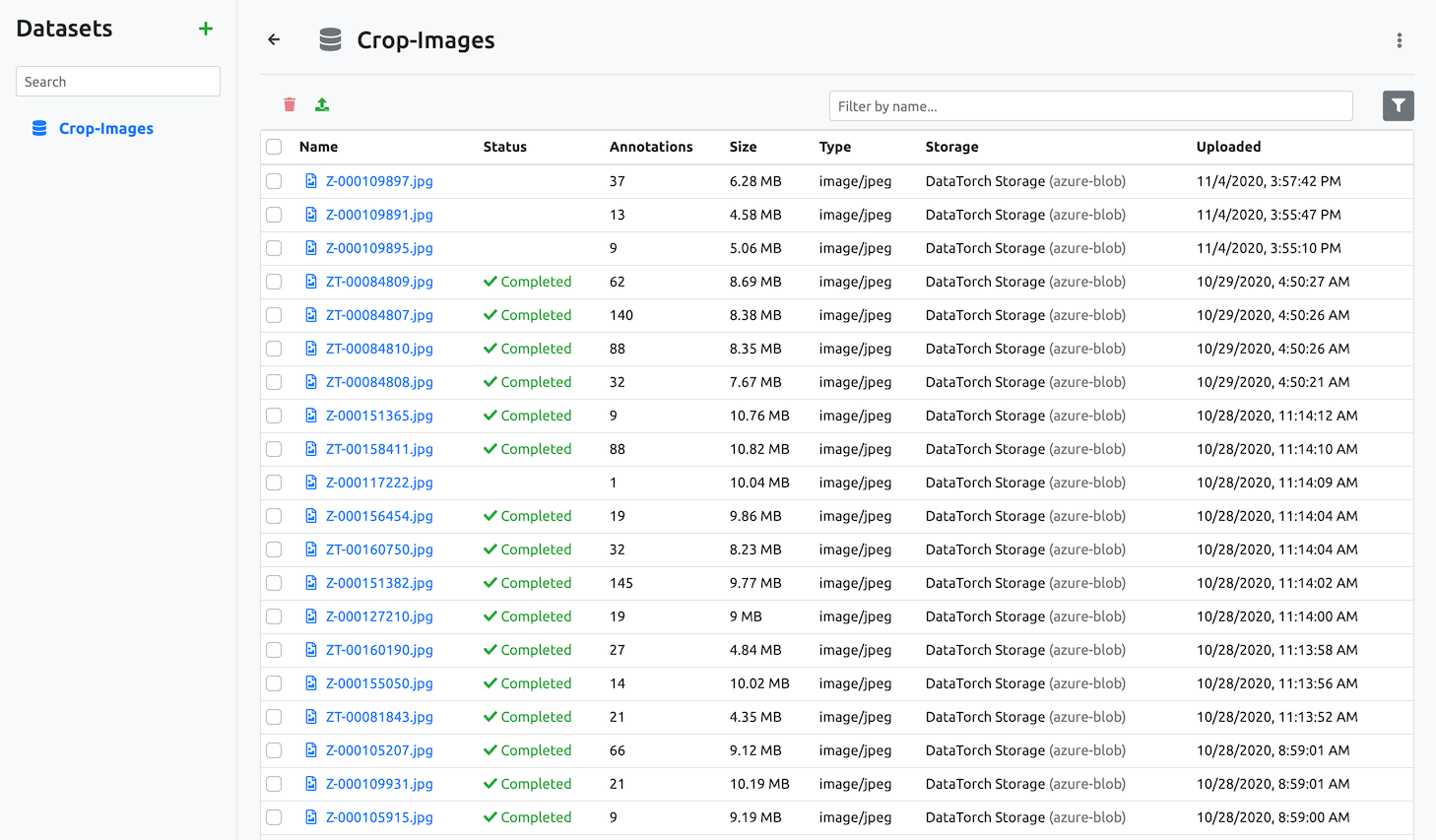
Datasets & storage
Your data, across every cloud. Never moved.
Point DataTorch at files in S3, Azure, GCS, or local storage and work on them in place. Credentials are validated on connect, and your images stay in your bucket under your own keys.
Multi-channel review
Every image, rendered the way the work needs it.
PNG and JPEG open like anywhere else. So does the file your last tool refused: high bit depth, oversized scans, fifty layers deep and still smooth. Where an image carries separate channels, tune each one’s curve until the signal reads, inspect the underlying tags when you need them, and save those defaults on the project so every reviewer opens it the same way.
Pipelines
Any step can be a person or a model.
Actions run either as a human task in the web client or as Python code on your own runner, under one inputs/outputs contract, so the two are interchangeable. Hand a step to a model when it earns it, without rewriting the workflow. Reviewers claim assigned work from a task inbox, every run keeps its log, and each sign-off adds to the labeled set your next training run uses.
API & SDK
Automate everything from code.
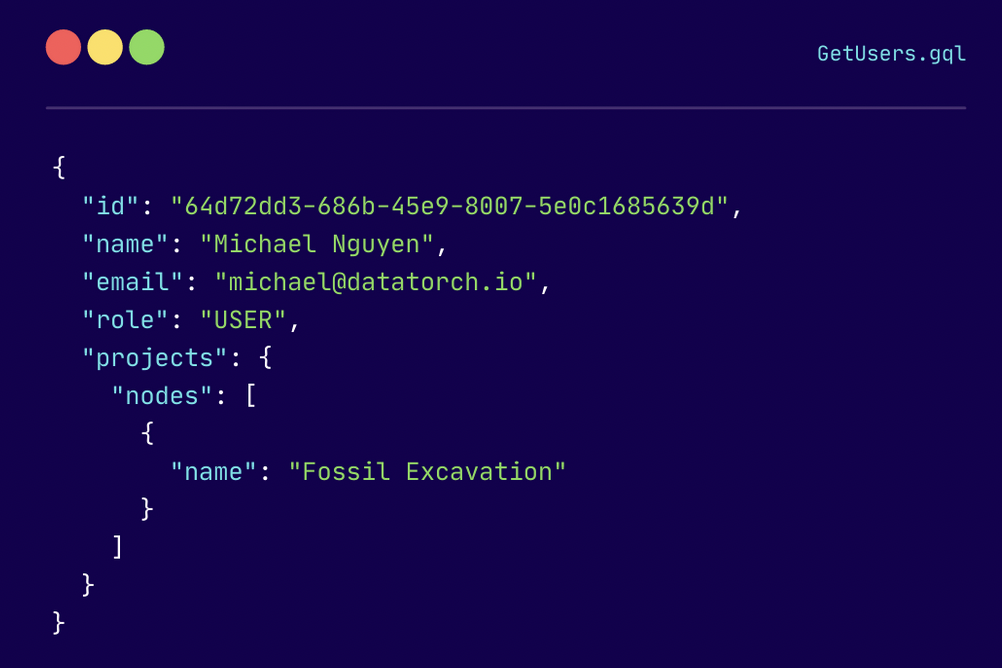
A full GraphQL API and Python SDK reach every project, dataset, and pipeline: push predictions in from your own models, pull labeled data back out on your own schedule, and script everything in between.
Deployment
Hosted, your cloud, or fully air-gapped.
Run on our hosted cloud with nothing to operate, or ship the same product as a Helm chart into your own cloud or an air-gapped environment with an offline signed license. Your data and models stay in your tenancy either way.
Everything the workflow needs.
Storage-agnostic datasets
Point at files in any cloud or on local disk. DataTorch never moves them.
Create your own schemas
Build the label hierarchies and scoring fields yourself, shaped to how your team already works.
A full CV labeling toolset
Boxes, rotated boxes, polygons, keypoints, brushes, magic wand, and superpixel tools. Pixel-accurate masks in the browser.
Your models in the loop
Run your own models as pipeline steps and review their predictions inline: pre-label first, correct instead of draw.
Versioned actions & retained run logs
Every action is versioned and each run keeps its log, a reproducible record of what ran.
Roles & permissions
Org, team, and project-level access control over who can see and change what.
Public or private projects
Share with the field, or keep the work inside your org.
COCO & YOLO, in and out
Export to COCO or YOLO, import existing COCO datasets, or pull structured JSON through the API. Yours to take, anytime.
Three fields where it runs today.
See it on your own images.
Start with a free private project, or book a demo to discuss your team’s images and review workflow.
datatorch@datatorch.io · we reply within a business day

Tools and community for image annotation: label, review, and share datasets, from everyday photos to the imagery only specialists can read.
© 2026 DataTorch. All rights reserved.